On a daily basis, he plays in front of 52,000 spectators at one of Europe’s premier soccer venues, with the
Turkish powerhouse Galatasaray. As a young boy, defensive stalwart Victor Nelsson participated in the Kronborg
Cup a handful of times.
In 2010, Victor transferred from Hornbæk IF to FC Nordsjælland, where he made his Superliga debut
in September 2016 at the age of just 17. In the summer of 2019, Victor transferred from FC Nordsjælland to FC Copenhagen, the Danish champions that season
. His adventure abroad began in the summer of 2021 with his transfer
to Galatasaray on a 5-year contract.
The 23-year-old defender currently has 4 senior national team appearances, 35 U21 national team appearances,
143 Superliga matches, and 33 matches in the Turkish Süper Lig on his resume, where the North Zealand defender has also scored a single
goal.
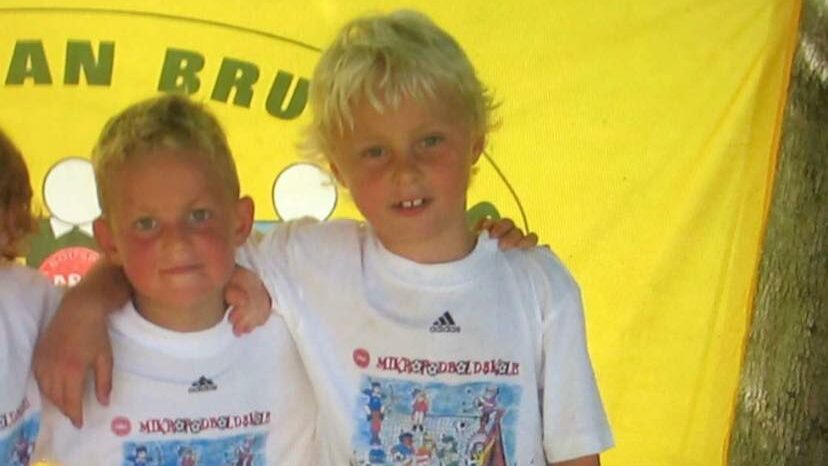
Making his debut on the big stage at a young age
Victor’s life as a soccer player began at an early age. Victor started playing soccer at the local
soccer club, Hornbæk IF, when he was 4–5 years old; his father coached him during those early years;
"I started out with my dad as my coach and was really just playing for fun because I really enjoyed it with all my school friends. We played a lot in our free time, too, so when I wasn’t training with my friends, I’d play by myself in the backyard or with my dad.”
Even back then, his passion for soccer was unmistakable. Victor shared his love of soccer
with his friends, and although he tried other sports, his enthusiasm for soccer was simply
the greatest;
"My friends started playing, too. I can't quite remember the exact reason. I also played handball for a short while
and tried a few other things. But that wasn't really my thing; it was just
soccer—the kind I played with the guys—that I really enjoyed."
Even at a young age, it was clear that Victor had a talent for soccer. On the Hornbæk team
, Victor also played alongside another national team player, and over the years, soccer began to
become more and more serious;
“Soccer has been a part of my life since I was very young. I played in Hornbæk until I was 10 years old,
where, along with Jacob (Jacob Bruun Larsen, ed.), I was one of the better players, and you could definitely
tell—at least in Hornbæk. Then I grew to love it more and more and got better and better. So
I think it was just a natural progression—I got better and better and took it more seriously at an early age.”
The dream of becoming a professional soccer player was also something that lived on in Victor as he ran around
on the fields of North Zealand.
“Yes, and that’s what everyone hopes for. That’s what most people who play in Hornbæk or Farum hope for. Many hope th
s it.”
During his teenage years, especially in Hornbæk, Victor remembers the group trips with the team to various
tournaments in Denmark and abroad—including when he participated in the Kronborg Cup on home turf at
in the Helsingør area. Victor especially remembers the social aspect of those trips;
“Those were good times back then. It was all fun and games, and then we’d go out and play a bunch of games—
—and head back to school with our friends. It was a great time.”
When soccer became more serious
Life in Hornbæk took a turn away from the usual recreational training there when Victor was scouted one day to Farum, where a whole new life began for Victor—and his family;
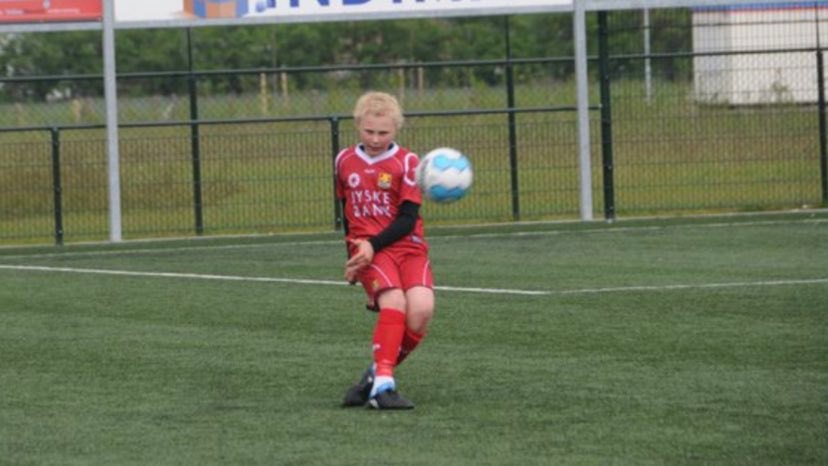
“I started participating in something called ‘specific training’ for all the players who had been selected—on Tuesdays and Thursdays— and then train with players from different age groups and skill levels. I was selected for it because there were some people from Nordsjælland who had seen me play in a few matches for Hornbæk, and I was really eager to do it. I jumped right in because back then, it was a huge deal to get into the specialized training program at FC Nordsjælland—a Superliga club—it was a huge deal. So I started there when I was 10–11 years old and stayed for a couple of years, and at age 12– I said goodbye to all the guys in Hornbæk to switch to Farum. So every day, there there was practice. My mom and dad drove me back and forth every single day.”
The transition from Hornbæk, where he was surrounded by friends, to a more competitive environment in Farum—
—was quite a change for Victor. In Hornbæk, there was more of a focus on the social aspect and the sense of community
surrounding soccer, whereas in Farum, the emphasis was more on competition;
“It (in Hornbæk, ed.) started out as fun. I mean, soccer is supposed to be fun—otherwise you’d have to find something else to do. It was playing with friends; it was cozy; it was Mom and Dad who picking you up after practice, maybe with a cold Faxe Kondi. It was pure fun and pure play.”
“But when I transferred to Farum and, all of a sudden, as a 12-year-old, had to start on the bench because there were others who were better, I didn’t really understand that at all. It was kind of like a process you have to go through, which you have to accept, and if you don’t, then you’ll probably have to find something else to do. It was a big change in the whole environment, but of course I played soccer because I thought it was fun, and I also quickly became friends with a lot of the guys out there, but I also played soccer to get better and be able to play on the weekends even at that age. You didn’t really do that in Hornbæk. It was just the guys, and if you didn’t make it to practice during the week, well, you’d play anyway. It was different in Farum.”
With competition already on the rise back then, Victor realized that it would take hard work to
reach the top;
“But I wasn’t one of the best when I came to Farum, nor was I the strongest or the fastest. But then
—step by step, week after week, month after month—I gradually got better. My passion for soccer has
always been the same. It’s just about going out there, giving it my all, and having fun. That’s also what I
try to do to this day. It’s deep inside me. But when I first came to Farum, I wasn’t one of the better players.”
To help the then-12-year-old boy navigate his new daily routine, it took a great deal of
support from his parents, who faithfully drove him back and forth between their home in Hornbæk and the training fields in Farum. That
support is something Victor remains very grateful for to this day;
“I have the most supportive parents anyone could ever wish for. It was a big deal when I
turned 18, got my driver’s license, and bought a car. Then I could drive on my own. But the fact that they were willing to sacrifice
their free time—and even a little bit of their work every now and then—to take me to practice. I’ll never
forget that. And they know that, too.”
Coaches Along the Way
On his journey to where he is today, Victor has had many great coaches who have helped him develop—
—both on and off the field. Two coaches in particular stand out in Victor’s career so far.
Victor clearly remembers how, during his teenage years—when Victor was on the verge of
joining FC Nordsjælland’s first team—Kasper Hjulmand gave him a stern talking-to because of his poor attitude;
“Kasper Hjulmand, who coached the U17 team in North Zealand, once gave me a reprimand, and that’s I actually received a ‘yellow card’ at age 16—since my performance wasn’t quite up to par—I was kind of on the fence, and as to whether they could use me on the U19 team—and because my behavior and conduct weren’t quite up to par at the time . He struck a chord with me, and I got the card; afterward, I had a meeting at Nordsjælland with my parents, and after that, I turned things around. So I’d like to praise him, and in terms of my playing, too, he taught me a lot during a crucial period—when you’re 15–17 years old. He taught me—and other players— what it means to be a professional soccer player.
Another coach who helped give Victor his European experience was Ståle Solbakken, who served as Victor’
e coach during his time at FC Copenhagen and was also the one who truly kickstarted Victor’s career—
—when Ståle brought him to FC Copenhagen;
“I’d also like to mention Ståle Solbakken, who brought me to FCK and taught me to become more international through the European matches, but also a tougher and more well-rounded defender with the ability to defend the goal. A talented coach and a wonderful person, with whom I’m still in touch today. I is someone I really like.”
The match that opened the door to the international stage
Despite his young age, Victor has already experienced quite a bit as a professional soccer player, including European
matches and national derbies in Denmark and Turkey. However, there are two moments that stand out;
“Yes, you could say that joining FC Copenhagen at age 20 and playing in every game.”
In addition to joining FC Copenhagen at a young age, there was also one match during his time there—
—that stands out for Victor, as it served as his ticket to the big international stage;
“But the moment things really took off for me—and when I started getting extra attention—
—from Danish soccer, the media, the fans, and the FC Copenhagen hierarchy—was after our victory over Celtic at
on the road. Now, I don’t want to pat myself on the back too much, but I played a really good game. Away against Celtic. We
won, and we advanced. The atmosphere was absolutely euphoric.”
His time at Galatasaray will bring many big matches on the world stage for Victor
Nelsson, who played two matches against FC Barcelona in the Europa League this spring. As a player for
Galatasaray, you’ll also have the opportunity to play in one of the world’s most intense derbies. The big derby—
n the Intercontinental Derby—between the two major Istanbul clubs, Galatasaray and Fenerbahçe, is
known for its wild atmosphere and excitement;
“Three weeks ago, I played against FC Barcelona. I could say—we’ve lost both games , unfortunately—but one of Europe’s, if not the world’s, biggest soccer derbies, namely Galatasaray versus Fenerbahçe. It’s not for kids.”
Matches like these are something Victor has dreamed of since he was a little boy;
“It was the kind of thing you dreamed about when you were little. And all eyes are on you. The national anthem starts playing. These are just the kinds of games you’ve watched on TV at home, the ones you think would be so cool to play in.”
In the portrait series “From Grassroots to Elite,” we follow the journey of former Kronborg Cup participants from grassroots soccer to elite soccer. The Kronborg Cup is a grassroots tournament that embraces and celebrates the sense of community and the breadth of the sport, where there is room for everyone. We celebrate the talent that goes all the way from dreams to a life in elite soccer at the highest level.